BIC Tip #1062: Repairs & the Contract in North Carolina

Repairs are one of the most common points of confusion in a real estate transaction. As a broker, it’s critical to understand how North Carolina contracts treat repairs — and when they’re binding versus optional.
The Role of the Additional Provisions Addendum
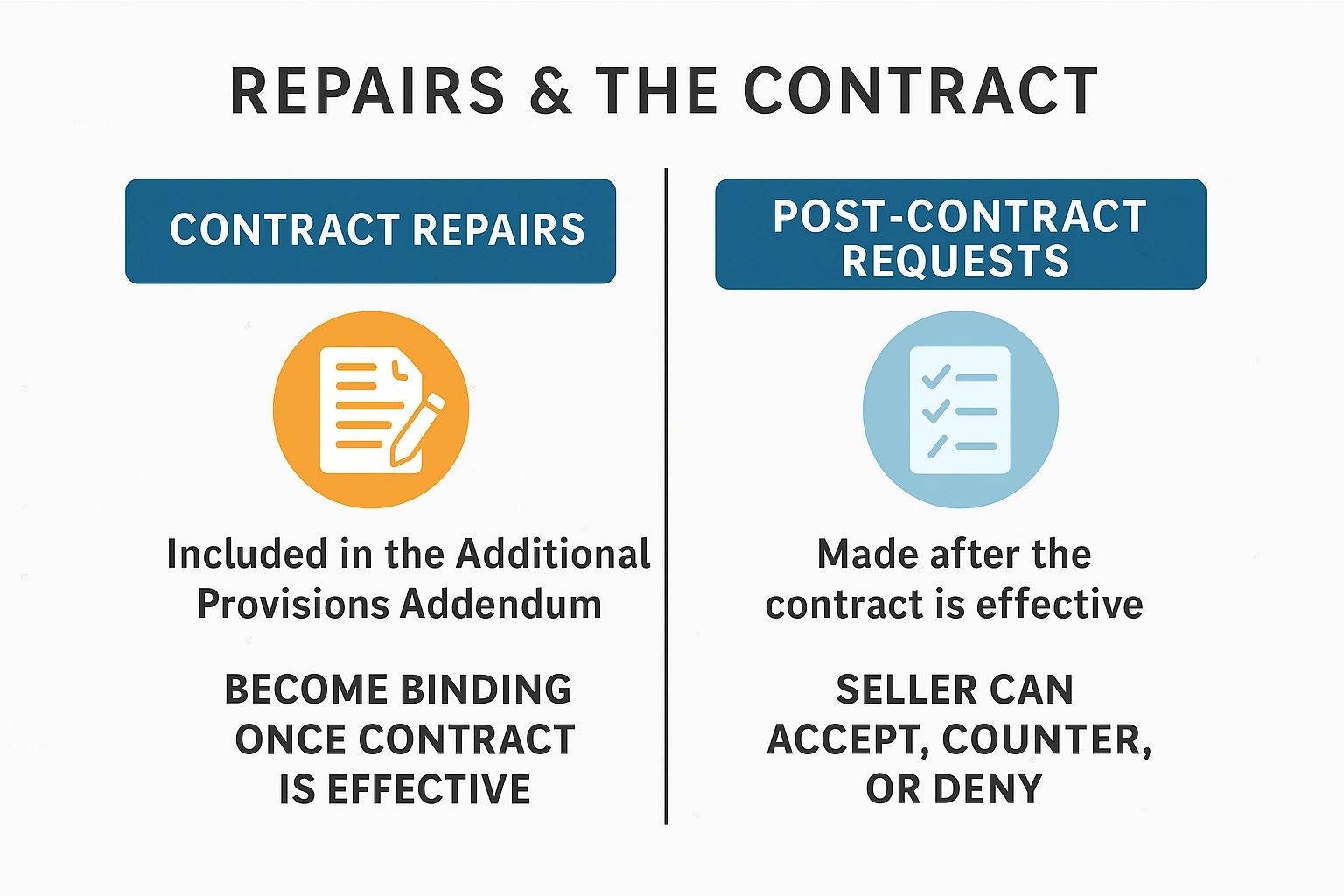
When submitted at the time of the offer, the Additional Provisions Addendum becomes part of the contract. This means that if specific repairs are written into that form, they are binding once the Offer to Purchase and Contract (Form 2-T) becomes effective.
In other words, repairs agreed to up front — before the contract is finalized — are enforceable. Both buyer and seller are obligated to honor those terms.
What Happens After the Contract Becomes Effective
Once the contract is effective, the rules change. Form 2-T makes it clear: the seller has no duty to make repairs requested after that point.
Even if those repairs are connected to a required FHA or VA appraisal, the seller is not automatically obligated to complete them. Instead, any post-contract repair requests must be submitted on Form 310-T (Request for Repairs/Improvements).
The Nature of Post-Contract Requests
Repairs presented on Form 310-T are exactly that — requests. The seller has full discretion to:
- Accept the request,
- Counter with modifications, or
- Deny it outright.
These requests don’t carry the same legal weight as repairs built into the original contract.
The Bottom Line for Brokers
As a broker, here’s the key message for your clients:
- Repairs included in the Additional Provisions Addendum at the time of offer are binding.
- Repairs requested later, on Form 310-T, are not enforceable — they’re negotiable.
👉 Only repairs that are part of the contract itself are guaranteed. Everything else is subject to the seller’s agreement.