BIC Tip #1055: Closing Delays in NC Real Estate

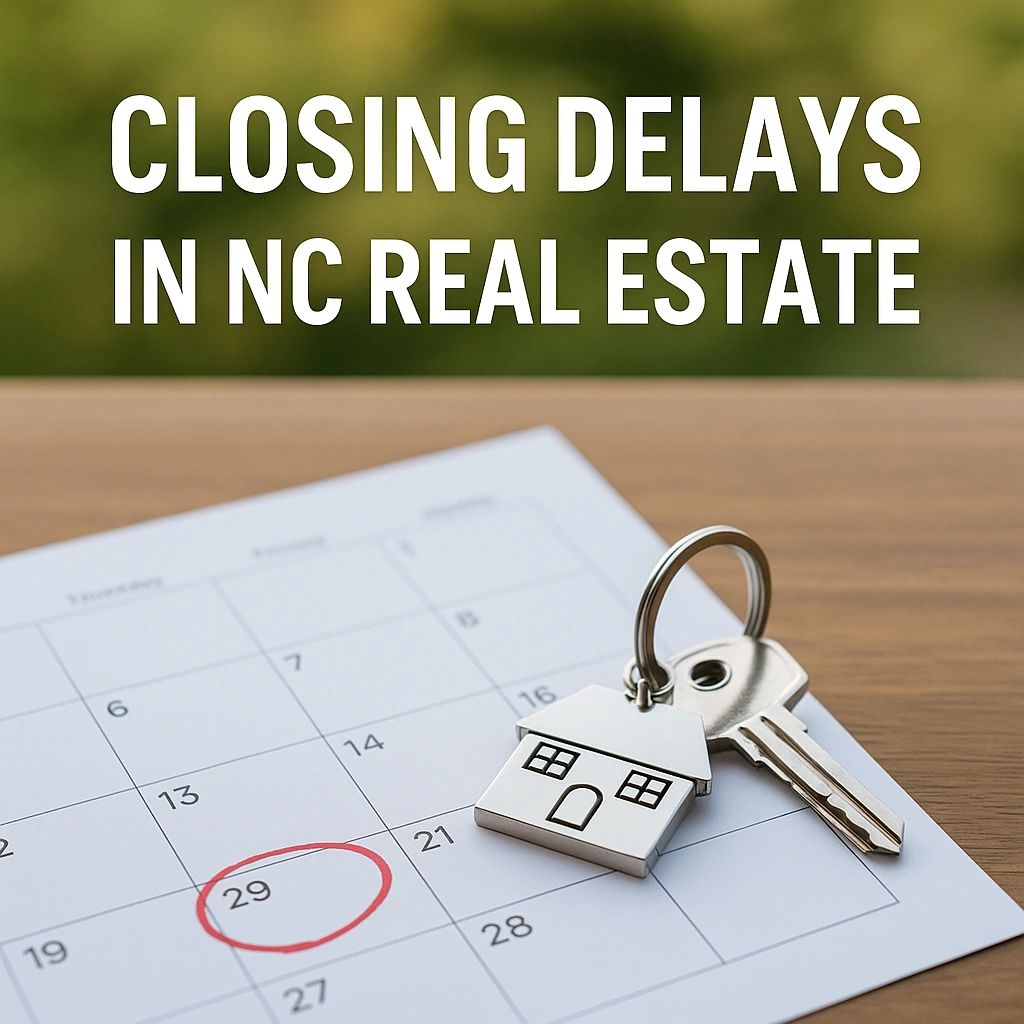
In North Carolina, buyers and sellers often circle a date on the calendar and call it “Closing Day.” But here’s the truth: in our state, the closing date listed in the contract is a target date, not a guaranteed deadline. Understanding how closings actually work can save you a lot of stress — and prevent costly mistakes.
What Is a “Target” Closing Date?
The Offer to Purchase and Contract (Form 2-T) used in NC real estate transactions sets a closing date, but it’s written as a target date. That means both parties are working toward that day, but delays can and do happen. Unless a true “time is of the essence” clause is added, the contract allows some flexibility if closing runs behind.
Common Reasons Closings Get Delayed
Even the smoothest transaction can hit bumps in the road. The most common causes of closing delays in North Carolina include:
- Appraisal Issues – Late scheduling, lender backlogs, or a value that comes in lower than expected.
- Title Problems – Old liens, boundary disputes, or paperwork that needs clearing before the attorney can issue a clean title.
- Repairs & Inspections – Negotiations over inspection items or unfinished contractor work.
- Loan Processing – Final underwriting, last-minute conditions, or missing documentation.
- Scheduling Conflicts – Attorneys, lenders, and clients all must align on a closing time.
Why Planning Ahead Matters
Because delays are possible, buyers and sellers should:
- Avoid scheduling movers or utility shutoffs for the exact closing day.
- Build in a 1–2 day cushion to allow for flexibility.
- Stay in close communication with the lender and attorney to keep things on track.
- Deliver all documents and funds early, not at the last minute.
The Bottom Line
In NC real estate, the closing date isn’t a promise — it’s a target. Planning ahead, understanding where delays can occur, and staying flexible will help you manage expectations and reduce stress.
Pro Tip: If your situation requires a hard deadline — like a relocation or new construction move-in — talk to your attorney about adding a “time is of the essence” clause to your contract.
Closings may not always happen exactly on schedule, but with preparation and patience, you’ll get the keys in your hand.