BIC Tip #1065: Disputed Earnest Money
Earnest money is designed to show a buyer’s good faith when entering into a real estate contract. But what happens when things don’t go as planned, and both parties claim the money? In North Carolina, the rules are strict — and brokers need to know them.
The Rule Under NCGS 93A-12
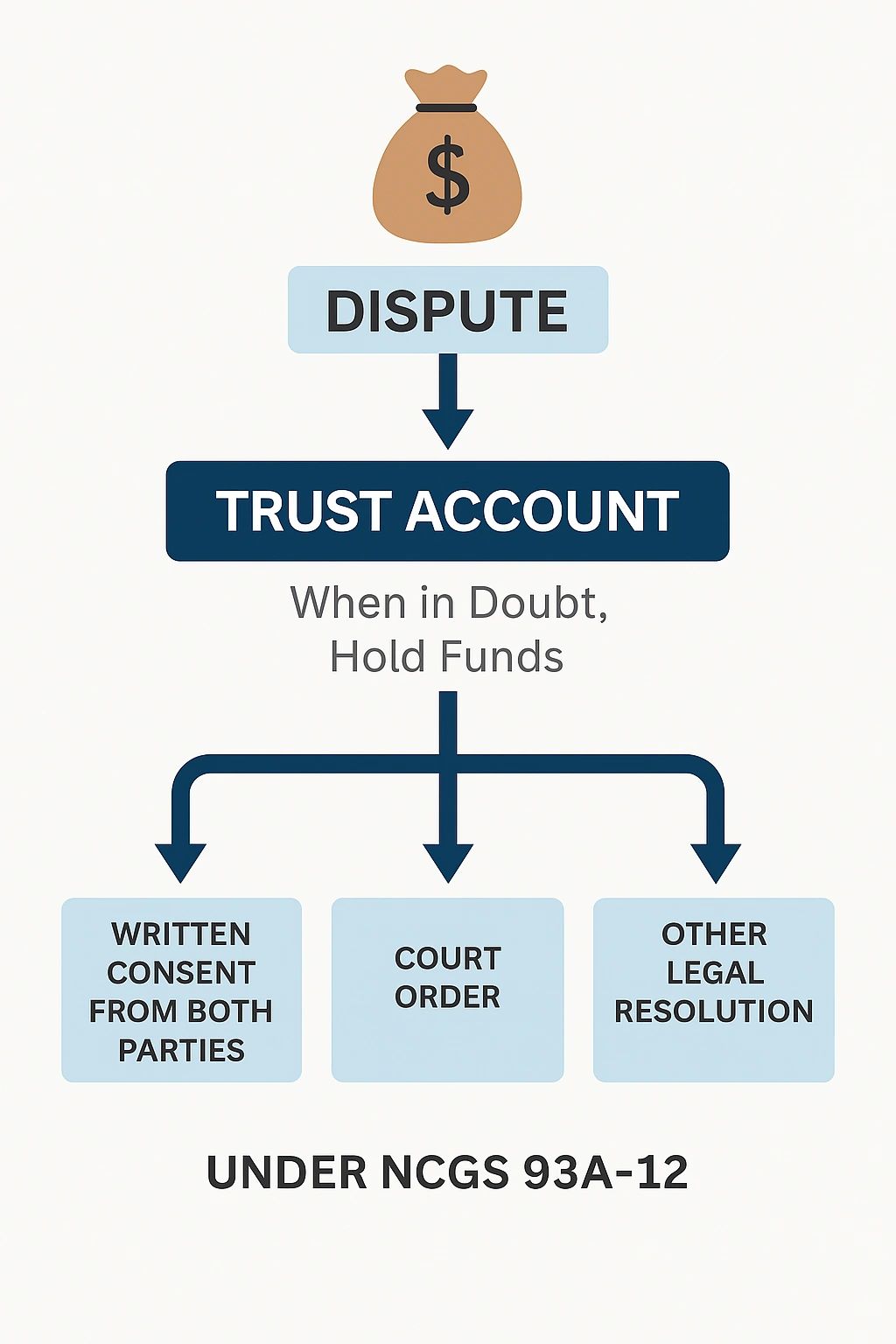
If a buyer and seller can’t agree on who gets disputed earnest money, brokers and escrow agents cannot release the funds on their own. The law is clear: the money must remain in the trust account until one of the following happens:
- Both parties provide written consent directing how the funds should be disbursed.
- A court order is issued deciding the rightful recipient.
- Another proper legal resolution is reached under applicable law.
Until then, the funds stay put.
Why This Matters
Disputes over earnest money can be emotional and contentious. A buyer may feel entitled to the money if a deal falls apart, while a seller may argue the buyer defaulted. But as brokers, we are not the judge or jury. Our role is to protect the trust account and follow the law.
Releasing funds prematurely — or making a unilateral decision — could put your license and your firm at risk.
The Broker’s Bottom Line
When in doubt, hold the funds. Remind clients that the money can’t be released without proper authority. Encourage them to work toward resolution, and if needed, let the courts decide.
👉 The safest approach: If it’s not clear, don’t move the money.