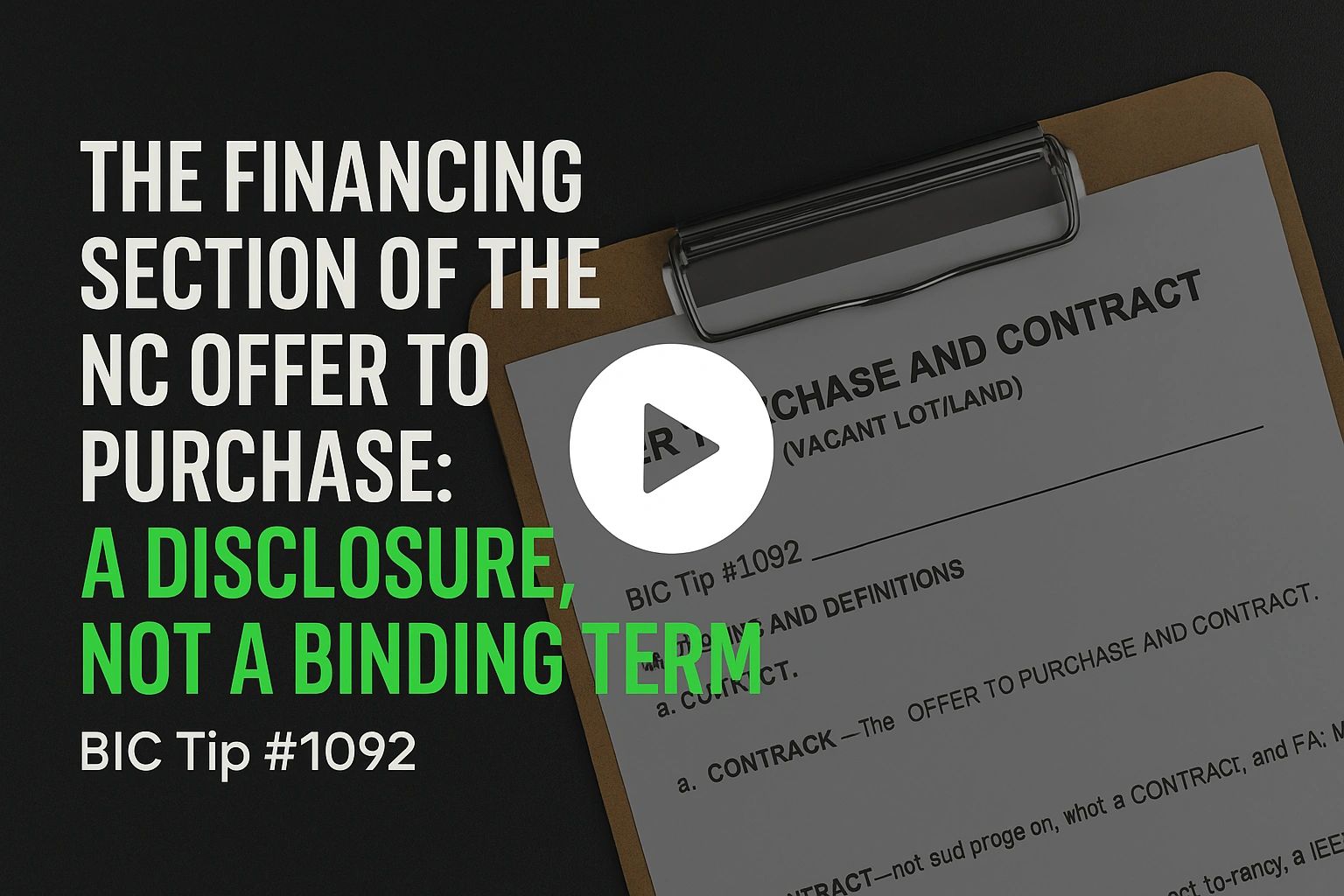
BIC TIP #1092 Financing Terms of the Contract
When reviewing an Offer to Purchase and Contract (Form 2-T) in North Carolina, many brokers and even buyers misunderstand the “Financing” portion of the document. It is easy to assume that the terms written in that section—loan type, amount, or other info—are binding conditions of the contract.
They are not.
The financing information is a disclosure only, not an enforceable promise.
The primary purpose of the financing section is to disclose the buyer’s intended method of financing the purchase to the seller. It gives the seller a general understanding of how the buyer plans to fund the transaction (for example, conventional loan, FHA, VA, or cash).
This allows the seller to make an informed decision when considering the offer, particularly if multiple offers are being reviewed. It also allows the listing agent to assess potential timelines or lending complications.
However, the financing section does not create a contractual obligation between the buyer and the seller regarding those loan details.
Nothing in the financing disclosure requires the buyer to actually obtain a loan of a specific type or amount. If the loan terms change, the buyer may still proceed to closing as long as the funds are available.
A frequent misconception occurs when a seller believes the buyer must use the exact loan program listed in the offer.
For example, a buyer who originally discloses an FHA loan may later switch to a conventional loan if terms improve. The seller cannot terminate or object based on that change.
Similarly, a buyer who initially discloses “cash” may later choose to finance the property through a lender. The key issue is the buyer’s ability to perform—not how the funds are sourced.